...
Pain-free Dental Fillings2026-06-02T12:41:46+00:00

Pain-free Dental Fillings

Traditional dental restoratives, or fillings, are most often made of silver amalgam. The strength and durability of this traditional dental material makes it useful for situations where restored teeth must withstand extreme forces that result from chewing, often in the back of the mouth.

Newer dental fillings include ceramic and plastic compounds that mimic the appearance of natural teeth. These compounds, often called composite resins, are usually used on the front teeth where a natural appearance is important, but they can also be used on the back teeth depending on the location and extent of the tooth decay.

What’s right for me?

Several factors influence the performance, durability, longevity, and expense of dental restorations, including:

  • The components used in the filling material

  • The amount of tooth structure remaining

  • Where and how the filling is placed

  • The chewing load that the tooth will have to bear

  • The length and number of visits needed to prepare and adjust the restored tooth

Children's dentistry. Live funny photo of a laughing child at the dentist's appointment
Dentist in dental office talking with male patient and preparing for treatment

Understanding Direct and Indirect Options

Before your treatment begins, your doctor will discuss with you all of your options and help you choose the best filling for your particular case. In preparation for this discussion it may be helpful to understand the two basic types of dental fillings — direct and indirect.
  • Direct fillings are fillings placed into a prepared cavity in a single visit. They include silver amalgam, glass ionomers, resin ionomers, and composite (resin) fillings. The dentist prepares the tooth, places the filling, and adjusts it in one appointment.

  • Indirect fillings generally require two or more visits. They include inlays, onlays, and veneers fabricated with gold, base metal alloys, ceramics, or composites. They are used when a tooth has too much damage to support a filling but not enough to necessitate a crown. During the first visit, the dentist prepares the tooth and makes an impression of the area to be restored. The dentist then places a temporary covering over the prepared tooth. The impression is sent to a dental laboratory, which creates the dental restoration. At the next appointment, the dentist cements the restoration into the prepared cavity and adjusts it as needed.

Frequently Asked Questions

What type of dental filling materials do you use at Kenwood Dental Group?2026-05-28T07:08:10+00:00

We specialize in tooth-colored composite resin fillings that blend seamlessly with your natural teeth for a durable, invisible restoration. If a tooth has extensive damage that a standard filling can’t fix, we also offer custom Dental Crowns to fully protect the tooth structure.

Does getting a dental filling hurt?2026-05-28T07:08:30+00:00

Not at all; we use advanced local anesthetics to completely numb the area so you won’t feel a thing during the procedure. For patients who experience anxiety about dental work, our team provides gentle care options through our comprehensive General Dentistry services.

How long do tooth-colored composite fillings typically last?2026-05-28T07:09:37+00:00

With proper oral hygiene and regular checkups, composite fillings generally last between 5 to 10 years. Keeping up with routine Dental Exams & Cleanings is the best way to monitor your fillings and prevent new decay from forming.

Can I replace my old silver amalgam fillings with natural-looking ones?2026-05-28T07:09:57+00:00

Yes, we frequently replace old, dark silver fillings with modern, tooth-colored composite restorations for a cleaner look and better structural bond. If the old filling was very large and its removal leaves the tooth weak, we may recommend Inlays & Onlays to properly reinforce it.

What happens if a cavity is left untreated for too long?2026-05-28T07:10:19+00:00

If decay passes through the enamel and reaches the tooth’s inner pulp, a simple filling will no longer be enough to save it. At that stage, you will likely need Root Canal Therapy or an extraction to stop the infection from spreading.

Our Services

Drop of fluoride coating teeth and gums metaphor oral hygiene, cleaning teeth and gums. 3D rendering
Portrait of happy family black African American father son child boy brushing teeth in bathroom. Morning routine with toothbrushes, father’s day
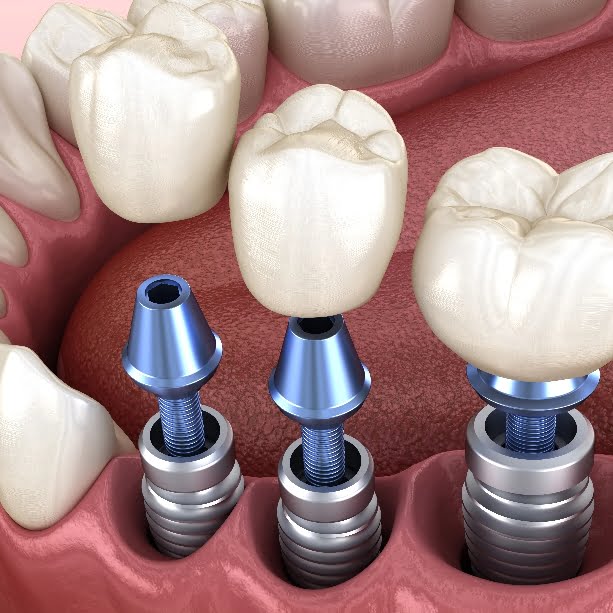
3 tooth crowns placement over 3 implants - concept
Using a shade guide at womans mouth to check veneer of tooth crown
Go to Top